
Digital Product
Recommended Resource
Preparing for your next grading? Use the Spinning Kick grading packs to revise the techniques, terminology, poomsae and sparring requirements for your level.

Like many martial arts, Taekwondo uses a grading system to measure student progress.
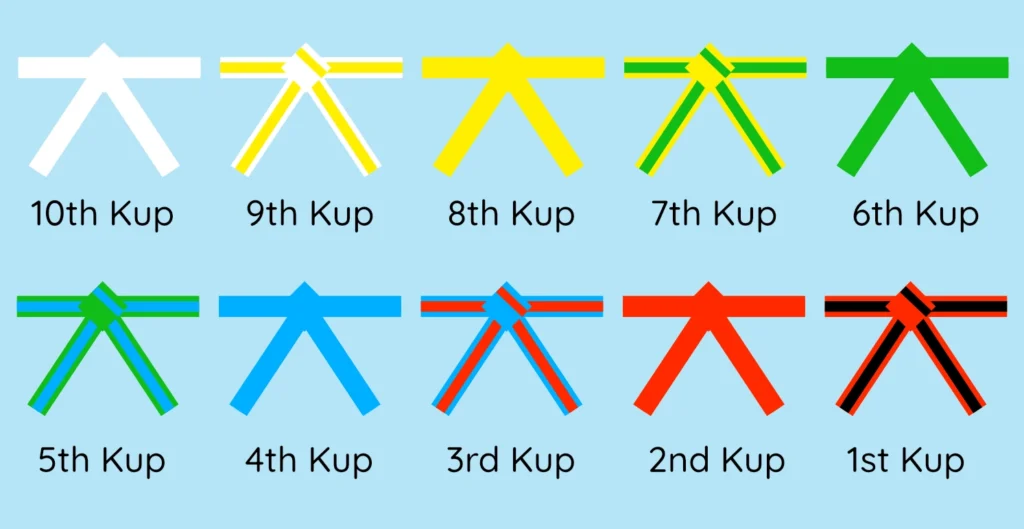
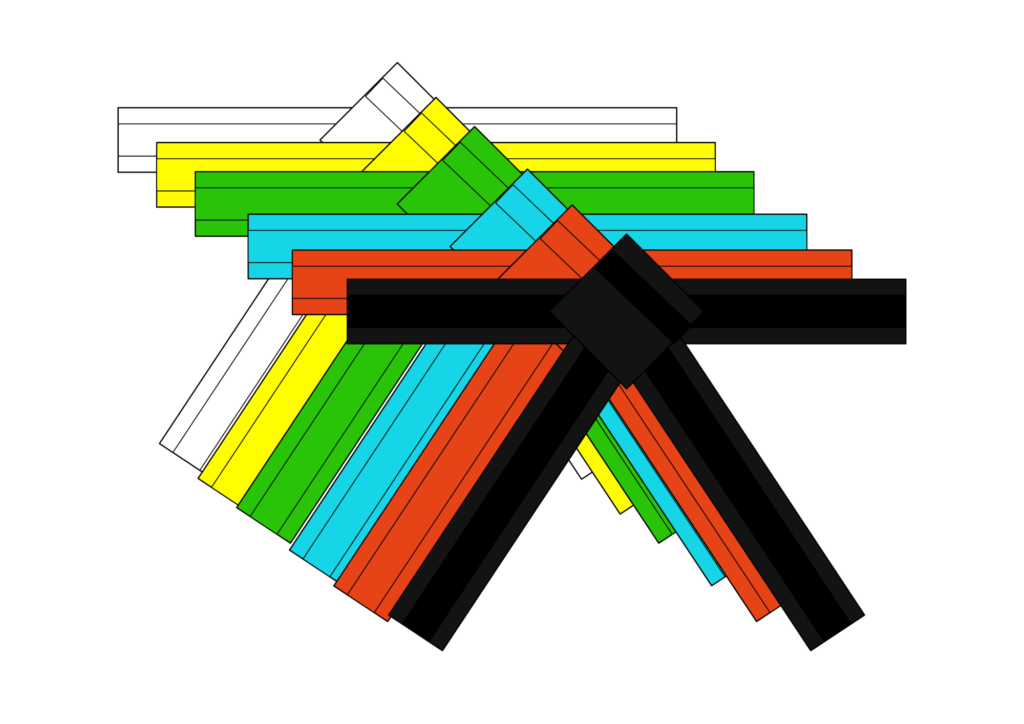
There are ten coloured belt grades known as Kup grades, which a student must progress through to reach black belt. The colour belt system shown here is an example of common belt colours, but this will vary between styles and organisations.
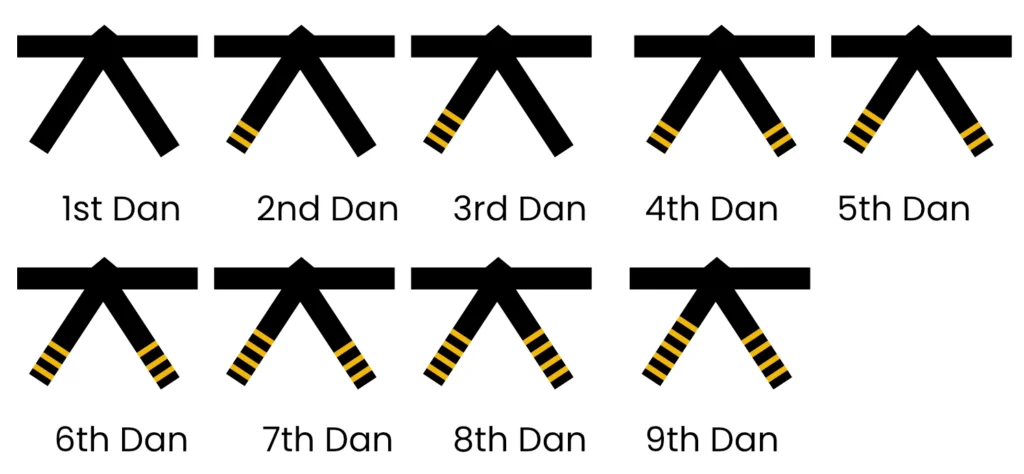
A black belt is known as a First Dan, or First Poom if under 15. After First Dan, students begin progressing through Dan grades from First to Ninth. From First Dan to Third Dan, practitioners are considered ‘trained students’ and often begin to assist with teaching Kup Grade students. This is an important aspect of a student’s development and can deepen their understanding of Taekwondo.
Progression through the Dan Grades can take many years and higher ranks are often awarded to those who give back to Taekwondo. Fourth to Sixth Dan grades are usually considered Masters, and Seventh to Ninth Dans as Grand Masters.
The colour belts used and frequency of grading exams can vary between styles, clubs and governing bodies. The opportunity to grade is always at the discretion of your instructor.
Kup Grades: Progressing from white to black belt requires students to satisfy the requirements for each grade during a grading examination. This usually involves a mixture of techniques, combinations, sparring and poomsae. Kup gradings are generally conducted in club by your instructor and are usually held every three months. As you progress through the grades, you may require more time to prepare for grading and may be invited to grade after six or nine months. Gradings are subject to invitation by your instructor and are conditional on good attendance and progress during lessons.
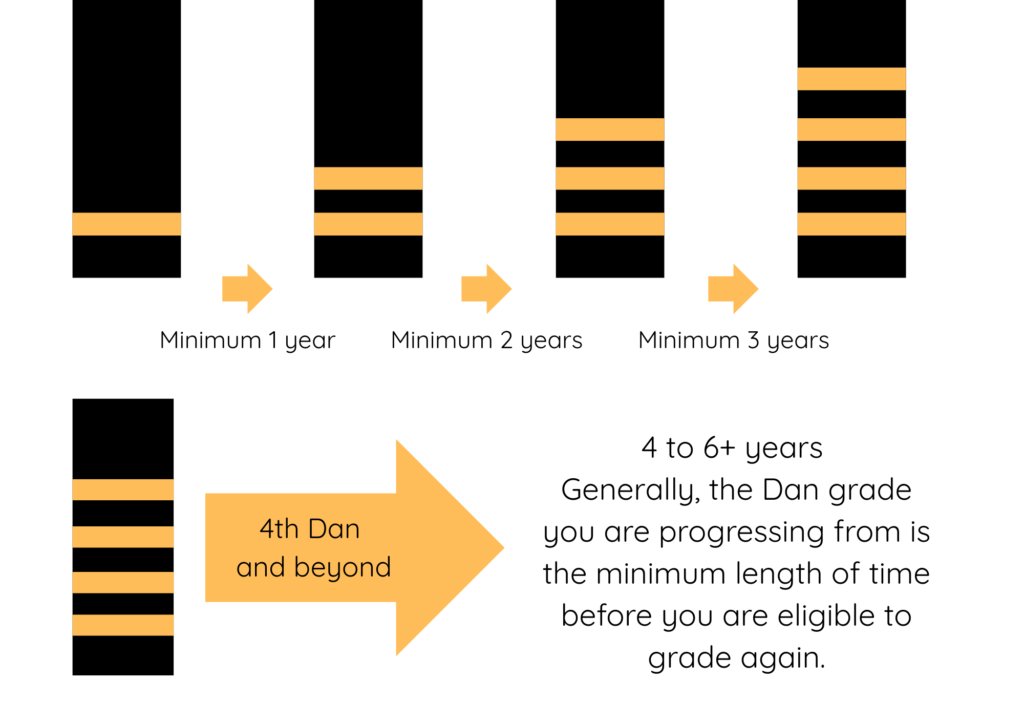
Dan Grades: Reaching black belt isn’t the end. When you achieve a black belt and become First Dan (or First Poom) you will continue your training and develop advanced skills, and may be expected to help teach other students and pass on your knowledge. There are nine Dan ranks, but unlike the Kup Grades, progressing is not as straight forward as training regularly. There are also minimum times to wait between Dan Grades, generally one year from 1st to 2nd Dan, two years from 2nd to 3rd Dan and three years between 3rd and 4th Dan. From 4th Dan onwards, it can take four to six years or more to progress between grades, and the highest Dan grades are often awarded to instructors who have trained for many years and given back to the martial art through teaching.
Kup grades refer to the ten ranks a student passes through before reaching black belt. These are often represented by different coloured belts for each grade.
When a student achieves a black belt, this is known as First Dan (or First Poom if under 15). From black belt onwards, students can progress through nine ranks known as Dan Grades. Many black belts will represent their Dan Grade with a gold stripe on their black belt, but this tends to be down to individual choice.
Kup gradings are usually held every three months at club level, and students will be invited by their instructor to grade if they meet the criteria for the next rank.
Dan gradings can be held in club, but some organisations will hold national gradings for multiple clubs to grade together. These can be held throughout the year, but there is a minimum time a student must wait before progressing to the next Dan Grade.
For students training regularly and maintaining good progress, it can take three to five years to achieve black belt.
No. The colours used on Spinning Kick are the most common in WT style Taekwondo; however, there will be some variation across different governing bodies and clubs.
Preparing for your next grading? Use the Spinning Kick grading packs to revise the techniques, terminology, poomsae and sparring requirements for your level.